
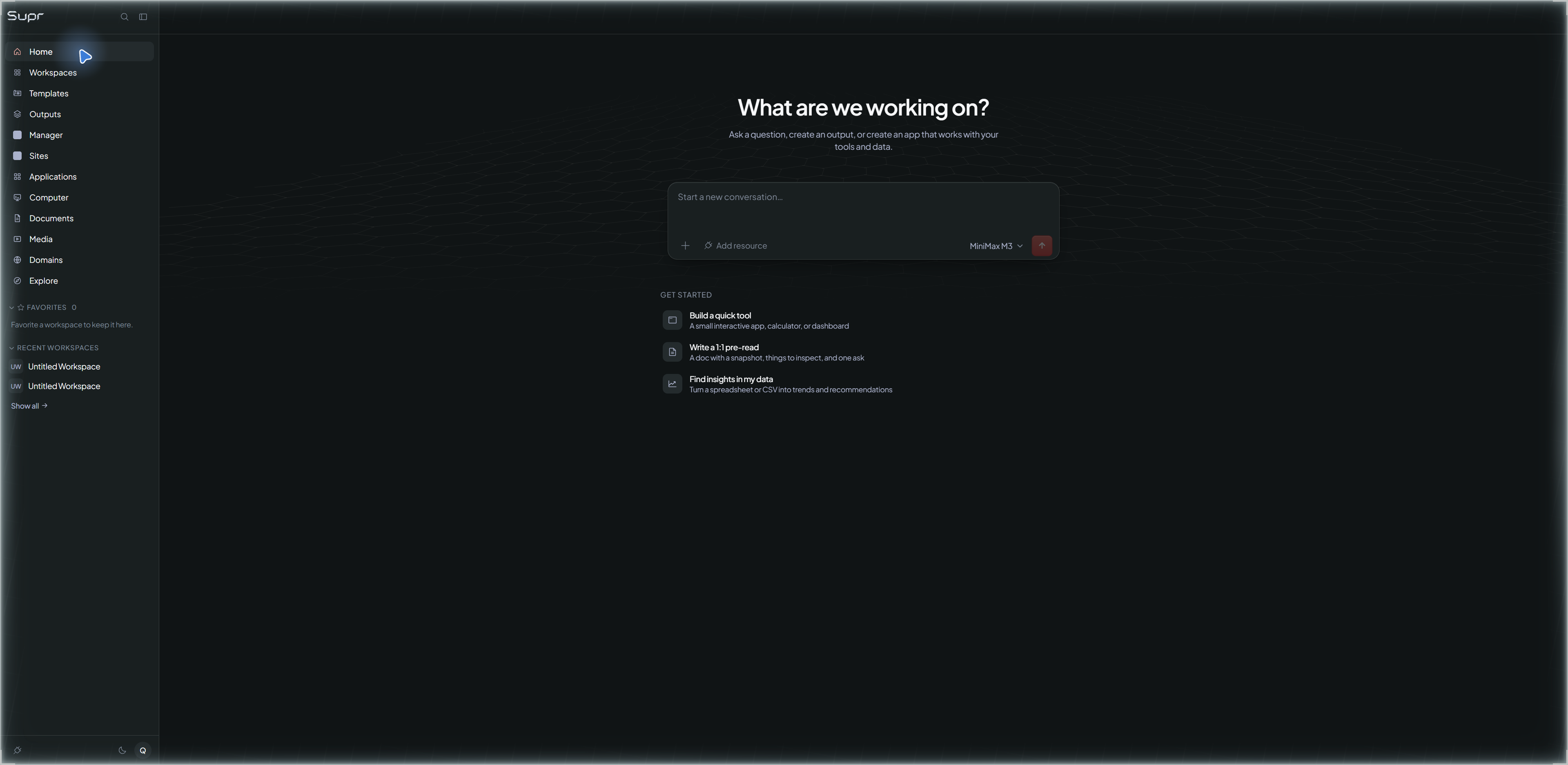
Actual SuprOS Home screen in private staging, with navigation and an idle composer.
SuprOS in private stagingA captured Home screen showing navigation and an idle composer. Opening a workspace does not confirm that an assignment has started.

Use Supr for

Plan work in SuprOS

Give Supr: The goal, relevant notes, sources, and the decisions you need to make.

What you get: A project brief, a reviewable plan, and proposed next steps.

Why it helps: The task has a home you can return to as the work develops.

Use Supr for

Prepare a content revision in SuprCMS

Give Supr: The page, source material, audience, and the change you want to make.

What you get: A content draft and a revision to review before choosing to publish.

Why it helps: You can inspect the content and its approval state before it becomes public.

Use Supr for

Prepare a reply in SuprInbox

Give Supr: The relevant message, context, and the outcome you want from the conversation.

What you get: A draft response to review, with sending kept as a separate decision.

Why it helps: Communication stays connected to the work rather than disappearing into another tab.

Use Supr for

Research a decision

Give Supr: The question, sources to compare, and the constraints that matter.

What you get: A source-backed brief, tradeoffs, and open questions for review.

Why it helps: You have something concrete to decide from before assigning the next task.

Use Supr for

Create useful files

Give Supr: Source material, structured data, or a document brief.

What you get: Draft Documents, Spreadsheets, Presentations, PDF or Web Artifacts to inspect where those capabilities are enabled.

Why it helps: The output stays close to the project context and the decisions behind it.

Use Supr for

Prepare a founder workday

Give Supr: One company, an audience, a goal, and the context you already know.

What you get: An example sequence of research, positioning, campaign drafts, and a review report.

Why it helps: A reusable starting point helps turn a broad goal into bounded assignments.

A solo developer repo review workspace with code review panels, risk cards, architecture notes, and launch readiness context.
Illustrative project settingSupr is strongest when the work has context, risk, a reviewable output, and enough value that saving an afternoon matters.

First run idea

Start with the task you would normally put off until tonight.

A launch audit, repo review, or bug investigation is enough to prove whether Supr belongs in your build workflow.

Fit check

Use Supr when the work deserves a trail.

Supr is strongest when the agent is helping with project-shaped work that you can review, approve, reuse, or tie back to a real decision.

A strong fit

The task has project context, a reviewable output, a clear owner, and enough value that saving an afternoon matters.

Start smaller

The task is fuzzy, risky, destructive, or externally visible. Ask Supr for a plan first, then approve the next step.

Not the right job

The task requires a licensed professional decision, unauthorized access, sensitive regulated data, or blind automation.

Prompt starters

Good first runs are specific, bounded, and useful today.

Turn these product notes into a clear content brief and list the decisions I need to review.

Prepare a draft update to this page using only the supplied sources.

Draft a reply to this customer question and flag anything that needs my input.

Compare these options and separate evidence from assumptions.

Create a short plan for the next week from these project notes.